
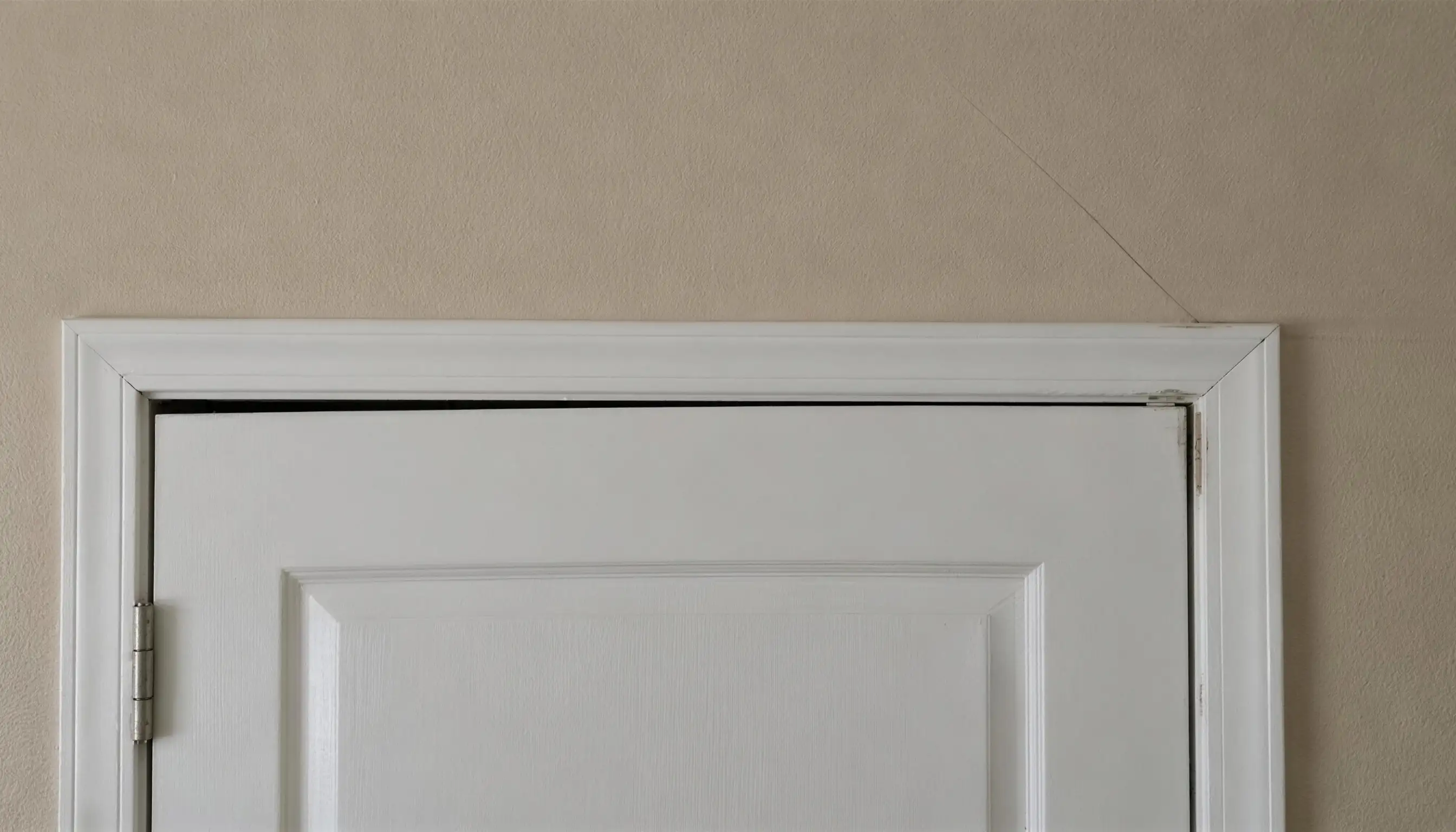
A door that binds in August and frees up by October is swollen wood or a loose hinge. Three doors and two windows on the same side of the house, each one tighter than last month? Now the frame itself is racking, and the slab under it has moved.
A single sticking opening only counts when it has company and keeps getting worse.
The rest of this page shows you how to tell them apart. It covers the signs that show up alongside and why the clay here moves. Then what to do before a repair company hands you a bid.
Why Does a Door Stick When the Foundation Has Not Moved?
Most sticking doors have nothing to do with the slab. Neither do most windows. Most one-door complaints come down to three things, none of them the slab.
Wood drinks moisture. One humid week is enough for a solid wood door or an old sash to grow and rub. A dry spell shrinks it right back. The sticking follows the weather, not the calendar. There’s no year-over-year trend, only weather.
Hardware fails slowly. Hinge screws back out of soft jamb stock. A strike plate walks. A door hung a hair out of plumb finally sags. These rub in the same spot every time. A screwdriver fixes them.
New houses settle too. A slab poured on fill can move a little in its first couple of years while the fill consolidates. One or two doors adjusting in a new build is normal. A builder’s warranty inspection should note it.
Run one test on all three. One opening or several? Worse than last year, or the same? Does it track the weather? One stable, seasonal opening is not the foundation.
When Do Sticking Doors and Windows Point to the Foundation?
Sticking doors and windows point to the foundation when several openings bind at once. The binding gets worse over months, not seasons. The openings usually cluster on one side or one corner of the house.
Why do doors and windows show it first? They’re rigid rectangles sitting in a frame that only stays square while the slab stays level. Drop or heave one edge of the slab and the wall above it racks. Every rough opening in that wall goes out of square. The door or sash inside has nowhere to go.
Direction matters as much as count. A door rubbing at the top latch corner tells you the frame has leaned toward the hinges. A window that won’t latch because the sash sits proud means the wall has tilted. Every opening in one hallway leaning the same way means the slab under it moved as a unit.
Five checks separate the two patterns.
- Count the openings. One or two is humidity or hardware. Three or more is a pattern.
- Map them. Scattered across the house points away from the slab. Clustered on one side, one corner or one hallway points at it.
- Track the change. Binding that comes and goes with the weather is wood. Binding that gets worse every month and never fully frees is movement.
- Check the hardware. Loose hinge screws or play in the hinge is a carpentry job. Tight hardware with a gap that opens only at the top corner is the frame racking.
- Look for a planed edge. A door planed once that rubs again within a year was never a carpentry problem.
What Other Signs Show Up With Foundation Movement?
Foundation movement that racks a door frame shows up in four other places in the house.
- Sloping floors. If you can feel it barefoot, the slab has tilted. Same if a dresser rocks where it used to sit flat. Lay a four-foot level by the sticking door and it tells you which way.
- Diagonal drywall cracks. Cracks that run from door and window corners follow the stress line of a racked frame. They widen on the side the slab has dropped.
- Stair-step cracks in brick. Mortar joints fail in a staircase pattern on the exterior when one section of slab settles.
- Gaps at trim lines. Crown molding pulling off the ceiling or baseboard pulling off the floor means part of the house is moving. So does a gap opening above a brick ledge.
No single sign proves a foundation problem. Two of them near a cluster of sticking doors call for an inspection.
Why Do North Texas Slabs Move?
Slabs in Dallas, Tarrant, Collin and Denton counties move because they sit on clay. The clay swells when wet and shrinks when dry. The 2009 ASCE Texas Section guideline on residential foundations lists racking of door and window frames as distress. The Foundation Performance Association’s 2007 guideline files doors that “stick, or will not close” under functional problems. It separates those from cosmetic cracking. ASCE adds: “Texas has large areas with clayey soils that shrink and swell with changes in soil moisture content.”
The amount of clay varies by county. These figures come from USDA NRCS soil survey data, compiled on our foundation data page.
Here is how much of each county’s rated soil falls in the high or very high shrink-swell classes:
| County | Soil Rated High or Very High Shrink-Swell |
|---|---|
| Collin | 74.5% |
| Dallas | 63.9% |
| Denton | 60.6% |
| Tarrant | 54.2% |
| Parker | 9.3% |
County figures describe the county, not your lot. A soil boring or the subdivision’s geotechnical report covers the lot itself. Even under one house the clay doesn’t wet and dry evenly. The perimeter dries fastest in a drought and wets fastest in a storm. So slab edges move more than the middle. Those differences tilt walls and rack door frames.
August is the confusing month. In a dry stretch the clay at the slab edge shrinks and the perimeter settles. Humid air indoors swells wood doors that same week and binds them just as hard. What separates them is what happens next.
The humidity door frees up when the air dries in October. The settlement door keeps rubbing. After the first big rain the slab edge heaves back. Now the door may bind in a different spot. The Foundation Performance Association lists seasonal soil moisture change as a cause of foundation movement in its own right. It describes heave as clay expanding with water and pushing the slab and frame above it upward.
What Should You Do Before You Call a Repair Company?
Four steps get you an independent read on the slab before anyone quotes you a repair.
- Record what sticks and when. Walk the house with a notepad. List every door and window that binds. Note which corner rubs and roughly when it started. Shoot a photo of each one closed.
- Photograph everything within ten feet of it. Cracks, gaps, a slope you can see, brick joints outside the same wall. Date the photos. Three months of dated change on record is worth more than any single visit.
- Check the easy causes once. Tighten hinge screws and watch one humid-to-dry cycle. If the door frees, you’re done. If it doesn’t, stop fixing symptoms.
- Book a foundation inspection with a licensed engineer. An engineer who sells no repairs has no reason to find more than is there. They measure the slab and write down what they observed. Any contractor you pick can price from that report. A repair company’s free inspection ends in a bid for the repair that company sells.
The foundation inspection cost guide covers what an engineer’s visit costs in North Texas and what changes the price.
Frequently Asked Questions
Are sticking doors a sign of foundation problems?
Sometimes. One door that binds when it’s humid and frees up when it’s dry? Swollen wood or a loose hinge. Several doors and windows on one side of the house, each binding a little more every month, is movement. Add a diagonal drywall crack or a floor that slopes and it’s time to call an engineer.
Who does residential foundation inspections in Arlington TX?
Licensed engineers who practice structural engineering inspect Arlington foundations, as do repair companies offering free evaluations. The difference is the report. An engineer’s sealed report records observed conditions and recommendations independent of any repair bid. A repair company’s evaluation is the first step in its sales process.
Find me a residential foundation inspector in Texas.
Start with the license. The Texas Board of Professional Engineers and Land Surveyors lists every PE and registered firm in the state. Pick one whose practice is residential foundations and who sells no repairs. Ask for a sample report before you book. The one you want records observed conditions and recommendations and has no bid stapled to the back.
Need a professional foundation inspector in Texas with a budget under 500 dollars.
A general foundation inspection in Texas averages less than that budget. The low end of the published range for an engineer’s inspection fits inside it. The middle of the range does not. The cost guide lists the ranges and what changes them. Elevation surveys, large homes and sealed lender or lawsuit reports cost more. A repair company’s free inspection is paid for by the bid that follows.
Book an Independent Foundation Inspection
HGS Engineering, PLLC inspects residential foundations across Dallas, Tarrant, Collin and Denton counties. The firm sells no repairs. You get a report recording what was observed and what is recommended, with a licensed PE’s seal. Take it to whichever contractor you choose.
Email projects@hgsengineering.com to schedule an inspection.
Sources
- ASCE Texas Section, Guidelines for the Evaluation and Repair of Residential Foundations, Version 2, adopted 2009: texasce.org PDF
- Foundation Performance Association, FPA-SC-13-0, Guidelines for the Evaluation of Foundation Movement: foundationperformance.org PDF
- USDA NRCS, soil physical properties reference (linear extensibility classes): efotg.sc.egov.usda.gov PDF
- HGS Engineering, North Texas foundation data (NRCS SSURGO shares by county, downloaded 2026-10-16): /foundation-data
Sources checked 2026-10-28.