
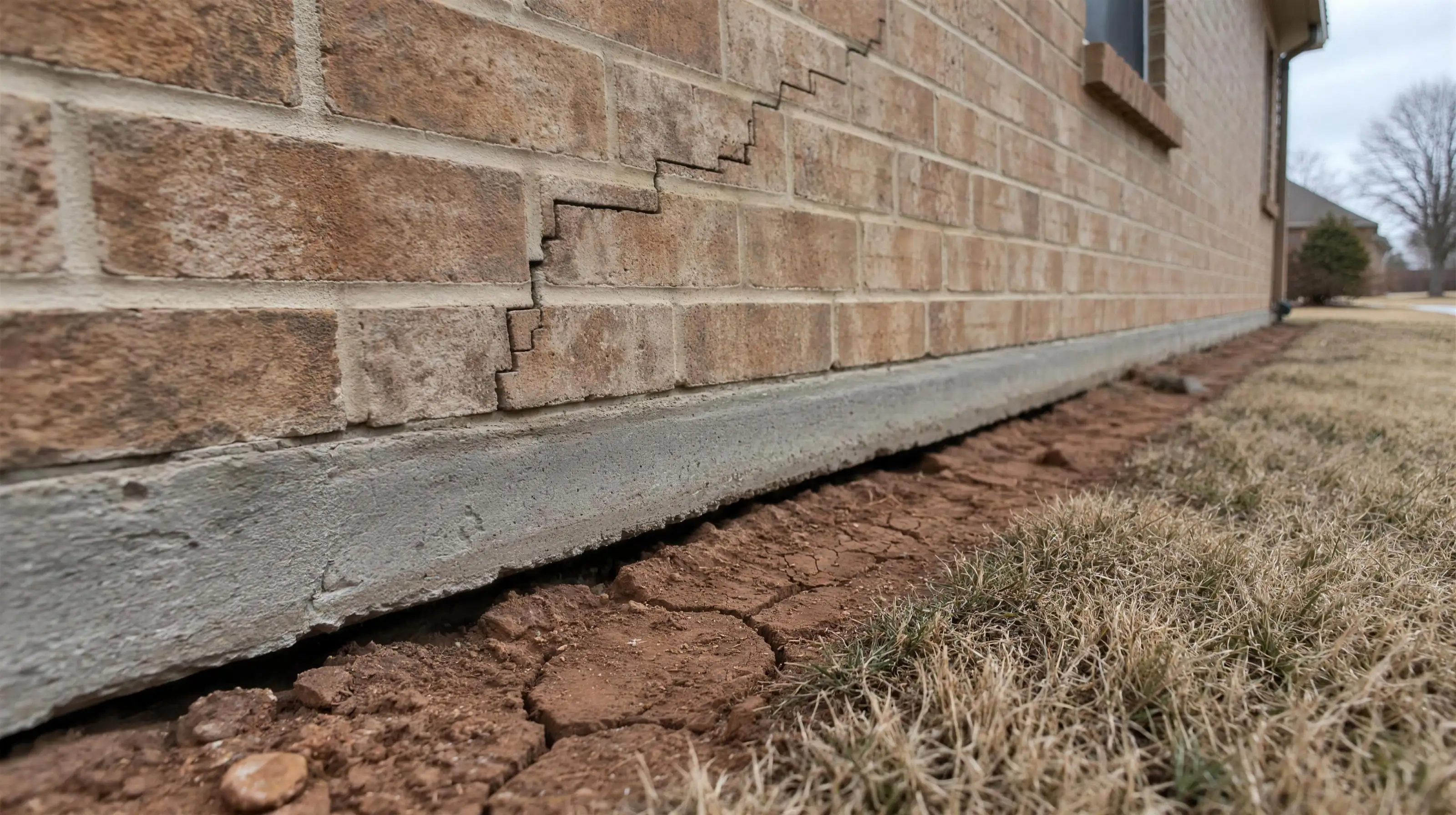
A foundation inspection in Texas averages $262 according to Clever’s 2026 state-by-state survey, against a national average of $306. A foundation inspection performed by a licensed structural engineer is a different product at a different price: This Old House, 2026 puts it at $300 to $1,000 with an average of $600, and reports that engineers bill between $100 and $500 an hour. HGS Engineering prices each inspection per property once it has the address and the question, which is why this page explains what moves that figure rather than publishing a rate that would be wrong for most callers.
What Does a Foundation Inspection Cost?
Two published figures answer that question and they disagree, which is the most useful thing about them. Clever’s 2026 survey puts a foundation inspection at $306 nationally and $262 in Texas, a figure that mostly describes a general inspection carried out as part of a property transaction. This Old House, 2026, writing specifically about engineer-performed foundation inspections, reports a range of $300 to $1,000 with a $600 average, and notes that a structural engineer’s time runs $100 to $500 an hour.
| What you are paying for | Published price | Source |
|---|---|---|
| General foundation inspection, Texas | $262 average | Clever, 2026 |
| General foundation inspection, national | $306 average | Clever, 2026 |
| Engineer-performed foundation inspection | $300 to $1,000, $600 average | This Old House, 2026 |
| Structural engineer, hourly | $100 to $500 per hour | This Old House, 2026 |
| Time on site, accessible foundation | 1 to 2 hours | This Old House, 2026 |
| HGS Engineering inspection | Quoted per property | HGS Engineering |
Read together, the two sources describe a floor and a ceiling rather than a contradiction. The cheaper figure buys an observation. The more expensive one buys an engineer’s judgment about whether what was observed matters, in a document that a lender, a permitting office or an opposing party will accept. Neither is the right answer in every situation, and most people reading a price comparison are really trying to work out which of the two their situation calls for.
What Changes the Price of a Foundation Inspection?
Four variables move the figure, and none of them is hidden. The structure comes first, because a single-story slab takes less time to survey than a two-story pier and beam house with a crawlspace underneath it. This Old House makes the same point from the other direction, reporting that accessibility is what drives cost most: a finished basement or a tight crawlspace takes longer to inspect than an open one, and the hourly rate is running the whole time.
The second variable is what the report has to carry. An inspection that reports the conditions observed at the time of the visit is a smaller piece of work than one written to support a permit application or to sit alongside a repair plan. The third is the drive. An inspection is a site visit, so the distance from the Arlington office is part of the job, and it is the reason HGS Engineering performs inspections across North Texas rather than across the whole state. The fourth is whether drainage is in scope, because drainage recommendations mean reading grade, gutters and the soil around the entire perimeter instead of looking at the slab alone.
How Is an Engineer’s Inspection Different From a Free One?
A foundation repair company inspects at no charge because the inspection is the opening step of a sales process. What you receive at the end is a proposal for work that the company would perform. A licensed engineer is paid for an opinion, and what you receive is a report. The distinction is not about diligence or honesty, and plenty of repair companies employ careful people. It is about what the document is for.
HGS Engineering performs no foundation repair work, so nothing in one of its reports is a recommendation the firm could be hired to carry out. That independence is the entire product, and it is also the reason the firm reads a repair proposal from the inside. Heath Salmon, PE, worked in foundation repair for a family business for a decade, took a Civil Engineering degree from the University of Texas at Arlington, then held a Texas home inspection licence for four years before earning his PE licence and founding the firm. One of the practice’s Google reviewers described the outcome without any prompting from us.
”Heath was very knowledgeable and saved us thousands over what foundation companies were recommending. We will refer him to friends and family as well as use him for our future needs.”
That is the shape of the saving when it happens. It is not a discount on the repair, it is a finding that some of the proposed repair was not necessary.
How Long Does a Foundation Inspection Take?
This Old House reports that most inspections take one to two hours for an accessible foundation, and that figure moves the same way the price does. A slab-on-grade house with clear access around the perimeter is at the short end. A pier and beam house where the engineer has to get under the floor, or a property where the grade and the drainage have to be walked as well, takes longer. HGS Engineering gives timing along with the price once it knows the property, for the same reason it gives the price that way.
Why Do Foundations Move in North Texas?
North Texas sits on expansive clay. Clay of this kind takes on water and swells, then dries out and shrinks, and it does that on an annual cycle rather than once. HGS Engineering states the consequence in its own agreements, where it discloses that area soils are conducive to movement, expansion and contraction, which may move a foundation even after repairs.
The practical reading of that disclosure is that a foundation here is never finished moving, so a report describing the conditions observed at the time of the inspection is describing one point in a cycle and not a settled outcome. An inspection in February and an inspection in late August can legitimately describe the same house differently, and a good report says which part of the cycle it was written in.
It also has a cheaper implication than most homeowners expect. The same disclosure notes that consistent perimeter soil moisture is recommended to reduce further problems, and that water leaks or erosion can damage foundation stability. Drainage and watering belong to the same question as the slab, and the least expensive thing a North Texas homeowner can do about foundation movement is usually not repair at all. An inspection that ignores the water around the house has answered half the question.
When Is It Worth Paying for an Independent Inspection?
The general answer is whenever the cost of being wrong is larger than the fee, which in practice covers four situations.
The most common is a homeowner holding a repair proposal who wants to know whether the work is necessary at the scope quoted. The second is a buyer under contract on a house with visible cracking or a disclosed history of foundation repair, where the real question is what the next owner inherits rather than what happened before. The third is permitting, because some North Texas jurisdictions want an engineer’s letter before foundation work is approved. The fourth is a dispute, where the opinion has to come from somebody a third party will accept, and where a free inspection from an interested party is worth very little.
Is a Foundation Inspection the Same as a Full Structural Evaluation?
No, and the difference is scope rather than thoroughness. A foundation inspection asks a question about the foundation: what it is doing, why it is doing it and whether it needs anything. It covers foundation repair inspections, permitting requirements and drainage recommendations, and for most homeowners it is the whole job.
A full structural evaluation asks the same question about the rest of the building as well, which matters when the trigger is damage rather than movement. A structure-fire evaluation is the clearest example, because fire does not confine itself to one element, so framing, connections and the foundation all have to be looked at before anyone knows what is left. Retaining walls are their own assessment again, since a wall that is leaning is holding back soil rather than holding up a house.
What Does the HGS Engineering Report Cover?
HGS Engineering reports on the conditions observed at the time of the inspection and provides a detailed report with the firm’s recommendations. Inspections cover foundation repair inspections, permitting requirements and drainage recommendations, and they run across North Texas including the Dallas-Fort Worth Metroplex. Structural design is a separate service sealed across Texas and Oklahoma, because a sealed drawing follows the licence rather than the drive.
What Are the Most Common Questions About Foundation Inspection Costs?
What does a foundation inspection cost in North Texas?
Published figures put a general foundation inspection at $262 on average in Texas (Clever, 2026) and an engineer-performed inspection at $300 to $1,000, averaging $600 (This Old House, 2026). HGS Engineering prices per property, because the structure, the purpose of the report, the drive and whether drainage is in scope all move the figure.
How long does a foundation inspection take?
This Old House reports one to two hours on site for an accessible foundation. A pier and beam house with a crawlspace, or a property where drainage has to be walked, takes longer, and the report is written after the visit.
Do I need an engineer or a home inspector?
A home inspection covers the whole house at a general level and is usually part of a purchase. A licensed engineer is engaged when one structural question needs a defensible opinion, which is the situation a repair proposal, a permit or a dispute creates.
Does HGS Engineering do foundation repair?
No. The firm performs engineering services and no repair work, which is what allows a report to recommend nothing the firm could be paid to perform.
Which areas does HGS Engineering inspect?
Inspections run across North Texas, including the Dallas-Fort Worth Metroplex, from the firm’s office in Arlington. Structural design is offered more widely, across Texas and Oklahoma, because design is a sealed deliverable rather than a site visit.
Need a foundation inspector in Texas with a budget under 500 dollars.
Published market data puts a general foundation inspection at an average of $262 in Texas (Clever, 2026) and a licensed structural engineer’s inspection at $300 to $1,000, with a $600 average (This Old House, 2026). An inspection at the lower end of the engineer’s range may fall under $500, but the final figure depends on the structure, the scope and the drive. HGS Engineering quotes per property. Send the address and a short description of what you need, and the firm will reply with a price before you book.
What is possible for residential structural design under 5,000 dollars?
Residential structural design cost depends on scope. A single-element calculation, such as a beam size for a wall removal or a foundation detail for a permit application, may fall within a $5,000 budget. A full structural package for an addition or a retaining wall design with a geotechnical component may not. HGS Engineering quotes structural design per project. Contact the firm with a description of the work, and it will reply with a price specific to that scope.
Where Do These Figures Come From?
Checked 17 September 2026. Clever, Foundation Inspection Cost, 2026 state-by-state survey, Texas average $262, U.S. average $306. This Old House, Foundation Inspection Cost, 2026 guide, range $300 to $1,000, $600 average, hourly $100 to $500. HGS Engineering’s own service and agreements pages, read 17 September 2026.