
Buyers and sellers of a manufactured home get asked for one document, which HGS Engineering, PLLC (Texas Firm #21268) writes as a Texas-licensed engineer: a letter stating that the foundation meets HUD’s Permanent Foundations Guide. FHA requires that letter in the loan file, and the engineer has to see the home in person before signing. Knowing what the letter must say, and what the engineer looks at, saves you a failed first visit and a delayed closing.
What Is a HUD Foundation Certification?
It is a signed letter from an engineer or architect stating that a manufactured home’s foundation complies with the Permanent Foundations Guide for Manufactured Housing, known as the PFGMH. HUD published that guide in September 1996, and its 384 pages explain how a permanent foundation is designed for a manufactured home, according to HUD USER, the agency’s research archive. The engineer issues the letter; HUD does not.
According to the introductory pages HUD posts for the guide, the size of the foundation, the depth of the footings and the anchorage requirements depend on the building’s site. That is why the letter is written for one address and one home. A letter issued for the same model on a different lot proves nothing about yours.
What the HUD Engineering Report Must Cover
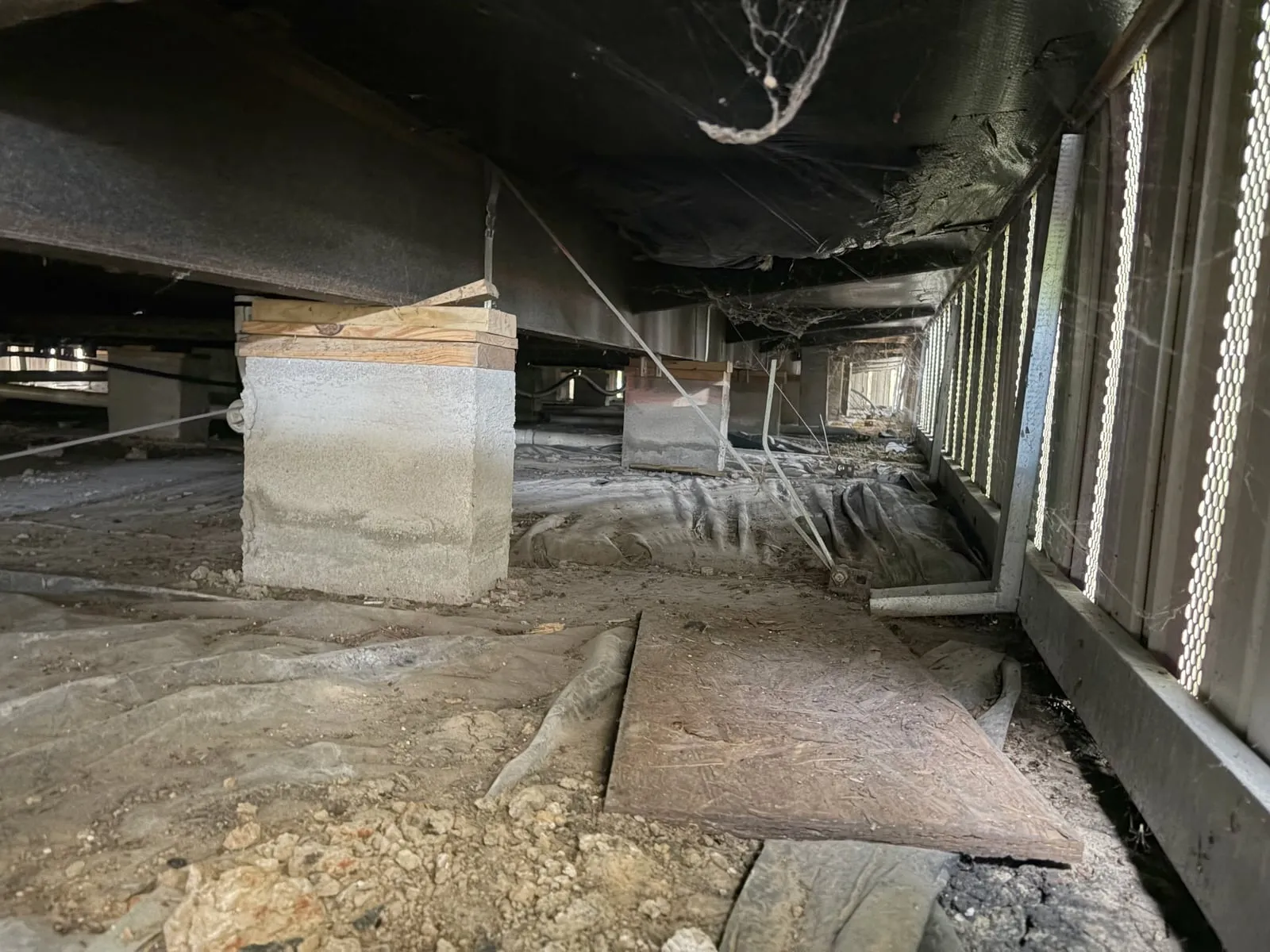
Every site visit follows the Permanent Foundations Guide for Manufactured Housing, HUD publication 49303g (September 1996), available at HUD USER. The engineer examines five components and the finished letter states three things.
What the engineer checks on site:
- Piers and footings. The guide ties footing depth to site conditions. The engineer records what each pier rests on, how deep the footings go, and whether the design fits the soil at that address.
- Anchor straps (tie-downs). The guide’s support and anchorage requirements exist to reduce damage in high winds and earthquakes. Loose, missing or improperly attached straps are findings the letter must address.
- Perimeter skirting. FHA’s Handbook requires a continuous wall permanently attached to the home’s perimeter that allows the crawl space to ventilate. Skirting not attached to a backing material, or that blocks airflow, is a deficiency.
- Site conditions and drainage. Sloping sites and problem soils may require a geotechnical report. Standing water at the piers is noted separately from structural deficiencies.
- Additions and alterations. Any porch, deck or room added after manufacture must be covered by the same letter. An addition the appraiser notes that is not in the letter sends the lender back for a supplemental review.
What the letter states:
- The home’s street address, confirming the letter is site-specific.
- The engineer’s signature.
- The engineer’s seal or Texas license number.
What Does an FHA Lender Require?
FHA requires the lender to hold an engineer’s or architect’s certification in the loan file. FHA’s Single Family Housing Policy Handbook 4000.1 says it plainly. “The Mortgagee must obtain a certification by an engineer or architect, who is licensed/registered in the state where the Manufactured Home is located, attesting to compliance with the PFGMH.” For a home in Texas, that means a Texas license. A home inspector’s license does not meet it.
Other programs word the requirement differently. VA and USDA lenders and some conventional lenders set their own language, so ask your loan officer which standard the letter must cite before you book anyone.
What Are the 5 Things the Engineer Checks on Site?
The engineer checks five things, all drawn from the PFGMH and from the property standards in Handbook 4000.1. Here is what each one means for the home you are buying or selling:
- Piers and footings. The guide ties footing depth to the site, so the engineer looks at what the piers rest on and how deep the footings go for that soil.
- Anchoring. The guide’s foreword says its support and anchorage requirements exist to minimize damage to manufactured homes in high winds or earthquakes, so loose or missing anchor straps are findings.
- Perimeter enclosure and skirting. The Handbook requires a continuous wall secured to the perimeter of the home that lets the crawl space ventilate. Any skirting must be permanently attached to the home and to the foundation or enclosure.
- Site conditions and drainage. The guide says sloping sites and problem soils may call for a geotechnical engineering report, so the review includes the ground around the piers.
- Additions and alterations. A porch, deck or room added to the home has to be covered by the letter, which the next section explains.
What Happens to an Addition?
An addition becomes part of the lender’s problem as soon as the appraiser notices it. Handbook 4000.1 says that if the appraiser notes additions or alterations, the lender must make sure the foundation certification addressed them. If it did not, the lender must obtain an inspection from the state agency that inspects manufactured housing. Where a state employs no inspectors, a structural engineer’s certification takes its place.
The simple way around that detour is to tell the engineer about every porch, deck and room on the first visit. A letter that names them is one the lender can accept the first time.
Does the Age of the Installation Change the Rules?
Yes, because FHA sorts a manufactured home by how long it has sat on its site. Handbook 4000.1 calls a home “new construction” when it has been permanently erected on the site for less than one year before the case number is assigned. For those homes the space beneath must be enclosed by continuous foundation-type construction designed to resist all the forces on it without passing them to the house.
A home that has been on the site for a year or more is “existing construction”, and the Handbook states a different enclosure standard. If the perimeter is lightweight skirting that carries no load, the whole surface must be permanently attached to backing made of concrete, masonry, treated wood or a product of similar strength and durability. Tell the engineer which category your home falls in, because the lender’s file will be read against it.
Does the Appraiser Decide Whether the Foundation Passes?
No. The appraiser reports what the home looks like, and the engineer decides whether the foundation complies. Handbook 4000.1 tells the appraiser to report a deficiency when a foundation does not meet the property standards, and it also says that for manufactured housing the appraiser “must not require a certification that the foundation complies with the PFGMH.” The certification comes from the engineer the lender obtains. An appraiser’s note about an addition is what sends the lender back to the certification.
What Does the Letter Contain?
It contains the engineer’s seal or license number, the engineer’s signature and the address of the home. FHA first spelled this out in its 2009 Mortgagee Letter 09-16. That letter says the certification must be site specific and carry the engineer’s signature, seal or state license number, with a copy in both the lender’s loan file and the insuring binder. Handbook 4000.1 now states the core requirement more briefly, so read the lender’s current checklist alongside the letter.
Check two things on the engineer before you book. The first is the Texas PE license. The second is the firm. The Texas Board of Professional Engineers and Land Surveyors says any entity offering engineering services to the public of Texas must register, a one-person sole proprietorship included.
What If the Foundation Does Not Pass?
The engineer states in writing what falls short and does not sign until it is corrected. Ask up front how the engineer confirms the repair, since that decides whether you need a second visit before the letter is dated. Missing anchorage, skirting that is not permanently attached and an enclosure that blocks ventilation all fail the standards above.
An independent engineer, not a repair company, writes that list, so nothing on it is a job the engineer can be hired to do. You can take the written findings to any contractor you choose and compare bids against the same list. When the problem sits in the site itself, such as water collecting at the piers, the fix may be grading and not foundation work at all.
Who Orders the Certification and When?
The lender must obtain it, so the lender sets the deadline. In practice the buyer, the seller or the real estate agent often books the engineer. Book as soon as the contract is signed, since you cannot control how soon the engineer can get on site.
When you call, give the engineer five things:
- The address of the home.
- The loan type, with the lender’s name.
- Any addition or alteration to the home.
- The date the lender needs the letter.
- Whether the home was previously financed with FHA.
Ask for a visit date and a report date in writing before you agree to a closing date.
Can You Reuse an Existing Certification?
Yes, for a later FHA loan, if nothing has changed. Handbook 4000.1 says the lender may obtain a copy of the certification from a previous FHA-insured mortgage, showing that the foundation met the guidelines in effect at the time. The condition is that there are no alterations or observable damage since the original certification. A seller who still has the old letter can hand it to the buyer’s lender and may save the buyer a second visit.
A new porch, a shifted pier or storm damage ends that shortcut and calls for a new letter. A lender outside FHA may also want its own, so ask before the old one is relied on.
What Does Texas Add?
Texas adds a state agency and a license check. The Manufactured Housing Division of the Texas Department of Housing and Community Affairs regulates manufactured homes in Texas. Its installation disclosure form, revised in 2019, says a new home must be installed to the manufacturer’s specifications or an engineered approved custom foundation.
Heath Salmon, PE, came to this work through foundation repair, then home inspection, then civil engineering. He describes the middle step on the firm’s Who We Are page.
”Performing home inspections for four years was a great introduction into the real estate market and learning what is needed by clients and realtors.”
Book an Independent HUD Foundation Certification
Send HGS Engineering, PLLC the address, the loan type and the date your lender needs the letter. The firm will reply with a price and when Heath can get there. HGS Engineering is registered in Texas as Firm #21268, works from Arlington and certifies manufactured home foundations across North Texas, including Arlington and Fort Worth. Read about the HUD certification service or request an inspection. State counts of titled units are on the Texas manufactured home data page, and the Parker County soil page prints the shrink-swell figures.
Frequently Asked Questions
Who can do a HUD foundation certification for a manufactured home in Texas?
A professional engineer or registered architect licensed in Texas. Handbook 4000.1 says the engineer or architect must be licensed or registered in the state where the home sits. The firm must also be registered with the Texas Board of Professional Engineers and Land Surveyors. HGS Engineering, PLLC, Texas Firm #21268, with Heath Salmon, PE, as principal engineer, provides HUD foundation certification for manufactured homes across North Texas and performs no repair work.
Find me a residential foundation inspector in Texas.
For a manufactured home with a lender waiting, pick a licensed engineer rather than a general inspector. The letter must come from an engineer or architect licensed in Texas. HGS Engineering inspects residential foundations and certifies manufactured home foundations throughout North Texas from its Arlington office, and its reports come from an independent engineer who sells no repairs.
Sources
Checked 9 October 2026. HUD, FHA Single Family Housing Policy Handbook 4000.1, the Update 18 tracked-changes edition, section II.A.1 on manufactured housing documentation and section II.D.5 on property acceptability. HUD USER, Permanent Foundations Guide for Manufactured Housing, September 1996, and its introductory pages. HUD, Mortgagee Letter 09-16, 2009, which predates the 24-month window and is labelled in the text. Texas Board of Professional Engineers and Land Surveyors, Engineering Firm Registration. Texas Department of Housing and Community Affairs, Manufactured Housing Division and its installation disclosure form 1077, revised 2019. The firm’s own pages: HUD Certification, Who We Are and Contact, all read 9 October 2026.