
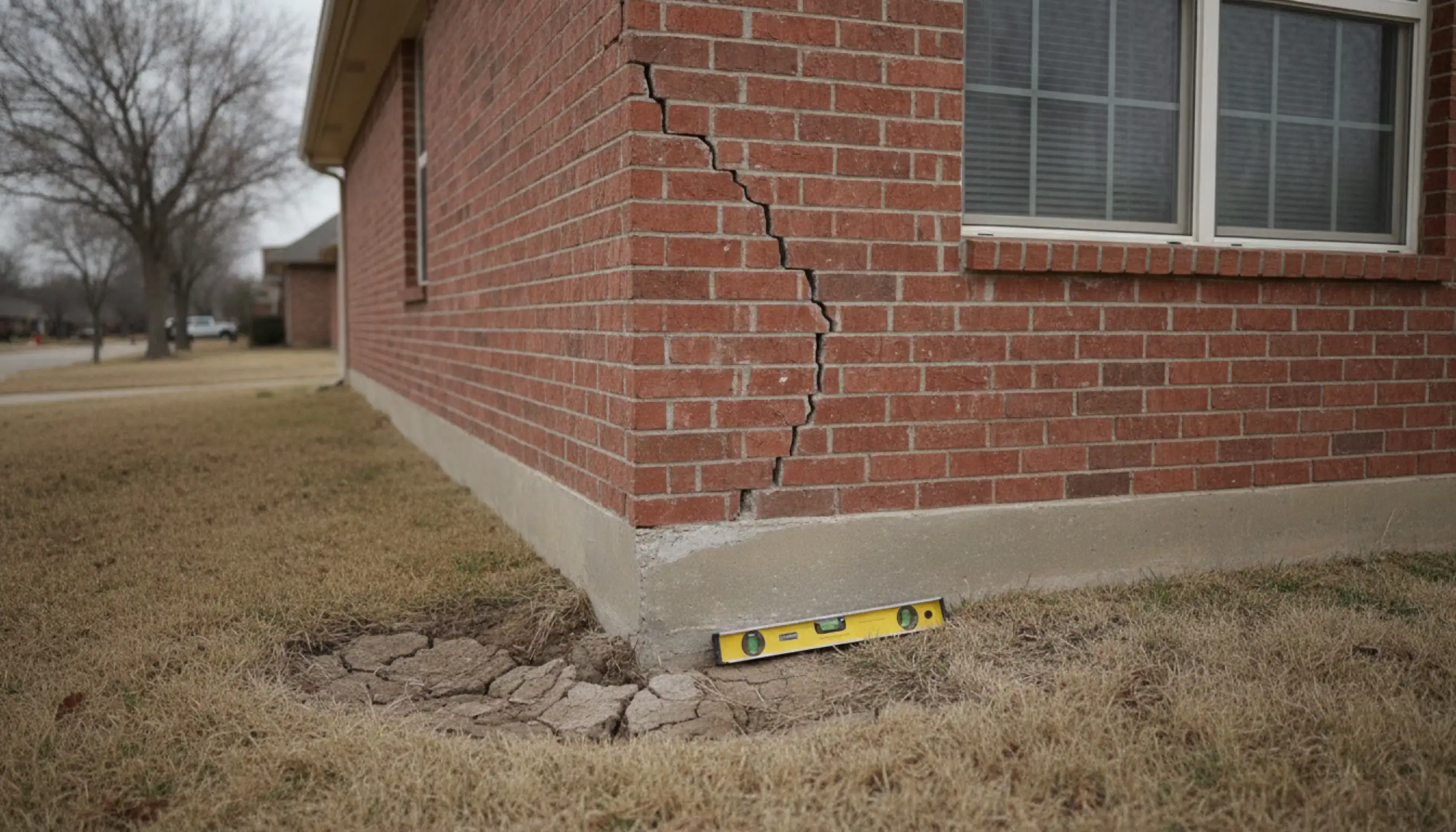
HGS Engineering, PLLC (Texas Firm #21268), a licensed engineering firm that sells no repairs, wrote these questions for owners hiring a repair company. A foundation repair project is one of the more significant investments you’ll make as a property owner. HomeAdvisor puts the national average at $5,174, with most projects landing between $2,225 and $8,133 (updated June 2026), and the work directly affects the structural integrity of your home. That’s why it’s just as important to choose the right contractor before proceeding with any projects.
Not every foundation repair company operates the same way. The problem is that most homeowners don’t realize the difference until the contract is signed and the work is underway. By then, your bargaining power is gone.
Learning how to choose the right foundation repair company is invaluable to your investment, so we prepared these questions to help you vet contractors. This checklist helps you determine early on how a company diagnoses problems, prices work, backs its warranties and communicates when things don’t go as planned.
Here are 15 questions to ask a foundation repair company before taking that crucial next step.
Licensing and Credentials
Texas has no state license for foundation repair contractors. A 2013 bill that would have created one, HB 613, failed on the House floor, and nothing has replaced it. That makes the questions in this section more important than the equivalent questions in a state with a licensing board, because no agency is doing this check for you. What you find out from the contractor is the only formal record you will have before work starts.
1. Are You Licensed and Insured to Perform Foundation Repair?
Texas does not license foundation repair contractors. A 2013 bill that would have created a state licence under the Texas Department of Licensing and Regulation, HB 613, failed on the House floor, and nothing has replaced it. That makes this question more important, not less. Ask what credentials the contractor holds and whether they carry general liability and workers’ compensation coverage. A company that can’t provide proof of insurance on the spot is one you should think twice about hiring.
2. How Long Have You Been in Business, and Can You Provide Local References?
Longevity alone doesn’t translate into guaranteed quality work, but it does give you something to verify. Chances are, a contractor with years of experience can point you toward previous clients without hesitation. When asking for references, ask for jobs similar to yours in size and foundation type.
3. Do You Have Experience With My Type of Foundation?
There are several foundation types, and each one requires a different approach. Slab-on-grade and pier-and-beam are among the most common, but they’re not the only ones. A contractor who specializes in one type may not be the right fit for another. Ask how many jobs they’ve completed on your specific foundation to get a feel for whether they’re the one for the job.
Diagnosis and Repair Plan
Before a contractor recommends any repair, they need a diagnosis. The diagnosis drives everything: the scope, the method, the price and how defensible the whole project is if anyone questions it later. A contractor who cannot describe their diagnostic process in specific terms, including what measurements they took and what they observed on the property, has given you a scope of work you have no way to check.
4. How Did You Determine What My Foundation Needs?
Don’t hesitate to ask questions. A reputable contractor should be able to walk you through their process in plain terms. What measurements did they take? What signs did they observe? Every decision should be based on something concrete, and if the answer is vague, that’s worth pressing on. The diagnosis drives the entire repair plan, so it needs to hold up under scrutiny.
5. Has Your Repair Plan Been Verified by an Independent Engineer?
Some contractors perform their own assessments and base their repair plan on that evaluation alone. The issue is that the company recommending the work is also the one profiting from it. A foundation inspection from a licensed, independent engineer gives you an unbiased evaluation of what your foundation actually needs. It’s one of the most surefire ways to confirm if the proposed repair plan is justified or inflated.
An independent inspection is a separate fee, but it sits in a different category from the repair estimate. The inspection answers whether the work is necessary at all, and at what scope. An inspector who performs no repair work has nothing to gain from a longer list of repairs, which is what makes the inspection useful rather than redundant. The two documents answer different questions: the engineer’s report describes conditions, and the contractor’s proposal describes a price.
6. Will I Receive a Detailed, Written Scope of Work Before Anything Starts?
A written scope of work should be mandatory. It should outline the specific repairs being performed, the methods and materials, the expected timeline and the total cost. If a contractor is reluctant to put the details in writing, that tells you more than any sales pitch will.
Foundation Repair Contract Terms
Three contractors with the same diagnosis can produce very different contracts. The differences are in the details, and they matter most after the work is done and something has not gone as expected. Reading each of these items before you sign is faster than resolving a dispute after the fact.
7. What Does Your Warranty Cover, and for How Long?
“Lifetime warranty” sounds reassuring, but it means very little without specifics. A warranty is only as good as the details. Ask what’s covered, what’s excluded and whether the warranty depends on conditions you’re expected to maintain. Get the actual document. Read it before you sign anything.
Warranty exclusions vary more than warranty coverage. Common exclusions in Texas foundation repair warranties include normal settlement, movement caused by soil moisture changes, damage from drainage problems and changes made to the structure after the repair. The soil moisture exclusion is significant in North Texas, because the clay here expands and contracts every year, and a warranty that excepts moisture-driven movement can be difficult to enforce after the first dry season. Ask specifically whether seasonal soil movement is covered or excluded.
8. Is the Warranty Transferable to a New Owner?
Not necessarily a dealbreaker if it’s not, but if you sell your home in the future, a transferable warranty adds real value to the transaction. This is something you should know upfront rather than finding out during a sale.
9. What’s Included in the Contract Price?
Some contracts are all-inclusive while others leave room for add-ons once work is underway. Save yourself from the unexpected charges by asking specifically about plumbing tests, landscaping repair, permits and cleanup. The goal here is to understand what you’re paying for and have realistic expectations once the crew starts showing up.
The most common add-on items in Texas foundation contracts are plumbing verification tests before and after pier installation, landscaping restoration for areas where piers are driven or excavated, and permits required by the city or county for the scope of work. Ask about each of these by name rather than asking a general whether anything could be added, because a general question usually gets a general answer.
Process and Communication
A foundation repair project runs over several days, involves disruption to the property and sometimes turns up findings the original inspection did not anticipate. How a contractor manages that sequence, and who on their side is responsible for keeping you informed, is a direct signal of how they will handle accountability after the work is complete.
10. What Repair Method Are You Recommending, and Why?
You don’t necessarily have to know the ins and outs of the process, but a contractor should be able to explain in layman’s terms why their recommendations fit your specific situation rather than providing you with vague answers. If the answer sounds generic, ask what about your foundation led them to that approach.
11. What’s the Expected Timeline, and Who Will Be On-Site Managing the Work?
Much like any project, a clear timeline is needed to set expectations for both sides. Ask how long the project will take from start to finish and whether a foreman or project manager will be present throughout. Knowing who’s accountable on-site matters just as much as knowing when the work will be finished.
12. How Will You Communicate and Handle Unexpected Findings?
There’s a high chance that the foundation repair will uncover surprises once the work begins. Ask how the company handles changes to the work or the cost when that happens. You should be informed and consulted before the contractor makes any major decisions. The project should always be the priority, not the schedule.
The pattern in complaints about foundation contractors is not usually that the work was wrong. It is that the homeowner learned about a change after the fact rather than before it. Ask upfront what the change-order process looks like when the crew finds something the initial inspection did not predict, and get that process in writing alongside the original scope.
Foundation Repair Red Flags Worth Catching
13. Why Is Your Estimate Significantly Different from Another I Received?
If you’re getting multiple estimates (and you definitely should), there’s a good chance the numbers won’t line up. Wide gaps usually point to different diagnoses and the contractor’s way of doing things. A trustworthy contractor would comfortably walk you through the rationale behind their estimate without dismissing the competition or dodging the question.
14. Do You Require a Large Deposit or Full Payment Before Work Begins?
For most contractors, a reasonable deposit before work starts is standard. A full payment upfront, however, is not. Payment should be structured around milestones or completion. If a contractor is pressuring you to pay everything before a single pier goes in the ground, walk away.
15. What Happens If the Repair Doesn’t Perform as Expected?
This is the question most homeowners don’t think to ask until it’s too late. The contractor’s answer will tell a lot about their confidence with the work and how they handle accountability after the job is completed. A company that stands behind its repairs will have no problem providing you with a clear, straightforward answer.
Ask Your Questions. Protect Your Investment
We hope this foundation repair company checklist will help you find the right contractor for your needs. If a contractor can answer all 15 questions without hesitation, that’s a good sign you’re in good hands. If they can’t, that tells you just as much.
The 15 questions above are not a scorecard. A contractor who answers twelve of them well is not necessarily better than one who answers all fifteen plainly. What the list gives you is a set of things to probe before you sign, so that nothing you discover later is a surprise the contractor could reasonably have told you upfront.
Before committing to any repair plan, consider starting with an independent evaluation. A licensed engineer can properly assess your foundation without a stake in whether repairs are sold or not. It’s one of the smartest steps you can take to protect your investment and make sure every dollar is well spent.
Need a foundation inspection? Schedule inspection services with HGS Engineering today. To check an engineer the same way, read the guide to comparing residential structural engineers in Texas.
Sources
- HomeAdvisor, How Much Does Foundation Repair Cost in 2026?, updated 20 June 2026.
- Texas Legislature Online, HB 613, 83rd Regular Session, relating to the regulation of foundation repair contractors, failed to pass to engrossment 9 May 2013.